
Bruker readings describe the material and its consistency under several test conditions.
Four studies, several analysis angles
Exploratory trials read from several complementary angles.
The studies presented on this site are exploratory. They document physiological and material signals, without constituting clinical evidence of a medical or therapeutic effect.
Reading framework
How to read these studies in relation to the T-KARE patch.
The UHA and NIFS studies were conducted on KOAR textiles integrating the mineral technology studied at the time. The T-KARE patch uses this same technological logic in a localized format, easier to wear.
Therefore, these studies should not be read as direct proof that every user will achieve the same results with the patch. They rather constitute a body of evidence: signals observed regarding effort and recovery with KOAR textiles, and then material documentation with Bruker instrumental readings.
This reading maintains a clear framework: the data guides the positioning of the patch around comfort, perceived recovery, and continuity in effort, without claiming a medical, therapeutic, or guaranteed performance effect.
UHA/NIFS data guides the interpretation of effort, lactate, fatigue, and temperature.
A reading oriented towards sports and daily use, without automatic promises.
From textile to patch
How the T-KARE patch came to be.
The T-KARE patch is a direct extension of the work carried out with the CNRS on textiles integrating our mineral complex. These studies highlighted two essential parameters: a sufficient application surface and a precisely defined quantity of mineral complex.
The patch was born from this insight: concentrating this optimal quantity of mineral complex on a precisely delimited surface, on the lower back, while ensuring wearing comfort for a minimum of five days.
With a textile, this concentration had to be spread over a larger surface to preserve the comfort of the garment. The patch made it possible to move past this stage: a targeted solution, simple to use, and independent of clothing.
The patch extends the work carried out with the CNRS on textiles integrating our mineral complex.
Two levers identified by the studies: a sufficient application surface and a precisely dosed quantity of mineral complex.
The optimal dose is concentrated on a delimited area, designed for wearing comfort of at least five days.
Where a textile had to dilute the concentration across the whole garment, the patch offers a targeted, easy-to-use solution.
UHA | Ergocycle
Double-blind physiological study on a triangular bike test.
The UHA report describes a trial campaign conducted on an ergocycle to compare an active KOAR outfit to a visually indistinguishable placebo outfit, with a reading centered on oxygenation and recovery.
- Triangular effort test on a bike chosen for its measurement stability.
- Controlled conditions: 23 to 25°C, 65 to 78% humidity.
- Tracked variables: VO2 max, VO2/HR, total O2, lactates, and lactates/PMT ratio.
- Koar Technology: total oxygen consumption +4.3% observed in this protocol.
UHA Chart
Average differences active vs placebo
Summary of the five most notable variables from the UHA dossier.
Oxygen markers progress, while lactate markers decrease, which may suggest a better-contained anaerobic load.
Quick read
Key UHA signals
Koar TechnologyTotal O2 +4.3%
2 min recoveryLactate -8%
EfficiencyVO2/HR +2.6%
Anaerobic loadLac/PMT -5%
Analyzed sample14 athletes (out of 15)
CapillaroscopyComplementary exam on 2 volunteers
In the UHA report, the most notable statistical finding concerns total oxygen consumption; other indicators remain exploratory.
Overall process
How the UHA test is conducted.
Medical visit, ECG, blood pressure, anthropometry, and pre-test rest instructions.
Warm-up, then workload increase every 2 minutes until maximum tolerance.
Respiratory exchanges, heart rate, lactates, and maximum terminal power.
Active/placebo crossover with random assignment and dedicated statistical reading.
Key results
Physiological signals
- VO2 max 2.9% higher with the active outfit.
- VO2/HR 2.6% higher.
- Total oxygen consumption 4.3% higher.
Recovery
Lactate reading
- Lactates at 2 minutes 8% lower.
- Max lactates / PMT ratio 5% lower.
- Trend towards a more favorable metabolic recovery.
Source
UHA Document
UHA conclusion: the main findings observed concern total oxygenation and lactate recovery, with a cautious interpretation given the sample size.
University report used as a documentary basis for exploratory analysis.
NIFS | Aerobic / Anaerobic
Randomized double-blind trial on aerobic and anaerobic effort.
The NIFS report describes a crossover study where each subject serves as their own control, on a treadmill then Wingate sprints, with recovery tracking.
- Prior familiarization session to limit the learning effect.
- Progressive test on a treadmill up to 85% of estimated max HR.
- 5 Wingate sprints of 15 seconds with 2.5 minutes of recovery.
- Repeated measures: HR, VO2peak, lactate, fatigue index, skin temperature.
NIFS Chart
Lactate during recovery (Koar Technology vs placebo)
The most marked difference appears in the first minutes of recovery.
The most readable differences concern the 5-15 minute post-effort window.
Quick read
Key NIFS highlights
Koar TechnologyLactate 10 min: -14%
Useful windowLactate 5-15 min lower
WingateLower fatigue index
ThermoregulationHigher skin temperature
VO2peak at 85% HRUnfavorable signal in the presentation
Analysis frameworkRepeated measures ANOVA (.05)
The NIFS reading is mostly oriented towards lactate recovery, fatigue, and temperature, with a less favorable VO2peak response according to the preliminary presentation.
Design
Study structure
- Crossover, randomized, double-blind design.
- Each participant tested with active and placebo outfit.
- Announced framework: 40 active subjects, 18 to 40 years old.
- Familiarization session to reduce learning bias.
Measurements
Tracked variables
- Treadmill up to 85% estimated max HR.
- VO2peak and cardiorespiratory response.
- Post-effort lactate at 5, 10, 15, and 20 minutes.
- Fatigue on Wingate sprints and skin temperature.
Reading
Interpretation framework
- Koar Technology: more favorable lactate recovery (5-15 minutes) in this protocol.
- Complementary signal: favorable trend on fatigue and skin temperature.
- Announced statistical framework: repeated measures ANOVA and comparison tests at the .05 threshold.
- VO2peak less differentiating in the presentation.
Usage contexts
Envisioned uses
- Repeated sessions with short sprints and incomplete recovery.
- Periods where fast metabolic recovery is a priority.
- Contexts where perceived thermal comfort and consistency over time are sought.
Sources
NIFS Documents
NIFS conclusion: the most readable trend appears on recovery, especially via the lactate differences observed in the first minutes after effort.
Main KOAR report and presentation of preliminary results.
Studies carried out with Bruker instruments | ATR Spectroscopy
Reading of the material under pressure and at ambient temperature.
The studies carried out with Bruker instruments document the stability of the material via ATR readings in several pressure and temperature conditions.
- ATR high pressure ambient.
- ATR high pressure 37C.
- ATR low pressure ambient.
- Complementary reading to the UHA/NIFS physiological studies.
Bruker Instruments Chart
Overlay of ATR spectra
The three curves present a global consistency in the spectral profile.
Low pressure ambient
High pressure ambient
High pressure 37C
Quick read
Interpretation guides for Bruker instruments
Compared spectra
3 conditions
ATR: low pressure ambient, high pressure ambient, and high pressure at 37°C
Main finding
Globally consistent ATR profiles
Similar spectral structure between conditions
Observed variations
Localized differences on certain bands
Amplitude differences depending on certain bands
Scope of evidence
Material proof
Complementary to the UHA/NIFS physiological studies
The studies carried out with Bruker instruments do not conclude on direct sports performance: these measurements primarily document the behavior of the material.
Conditions
Tested scenarios
- High pressure ambient.
- High pressure 37C.
- Low pressure ambient.
Objective
Material reading
- Compare spectral curves depending on the state of the support.
- Identify possible differences related to pressure/temperature.
- Document the stability of the mineral base.
Sources
Bruker instruments documents
Conclusion of studies carried out with Bruker instruments: these readings mostly confirm the consistency of the spectral behavior of the material according to the tested conditions, in complement to the physiological studies.
ATR reading files and powder reference. These documents primarily support the material reading.
KOAR BIO | Performance synthesis
The KOAR BIO garment during effort and on microcirculation.
A synthesis study combining a double-blind exercise test and a capillaroscopy examination. It compares the KOAR BIO garment — woven with an active bioceramic (mineral oxides, far infrared, negative ions) — against a visually identical placebo garment.
- Active bioceramic: 3 combined mechanisms (mineral oxides, FIR, negative ions).
- Incremental exercise test: +25 W every 2 min up to maximal tolerated power.
- 8 cross-referenced parameters: HR, MAP/PMT, VO2, lactates, ventilation, work, weight.
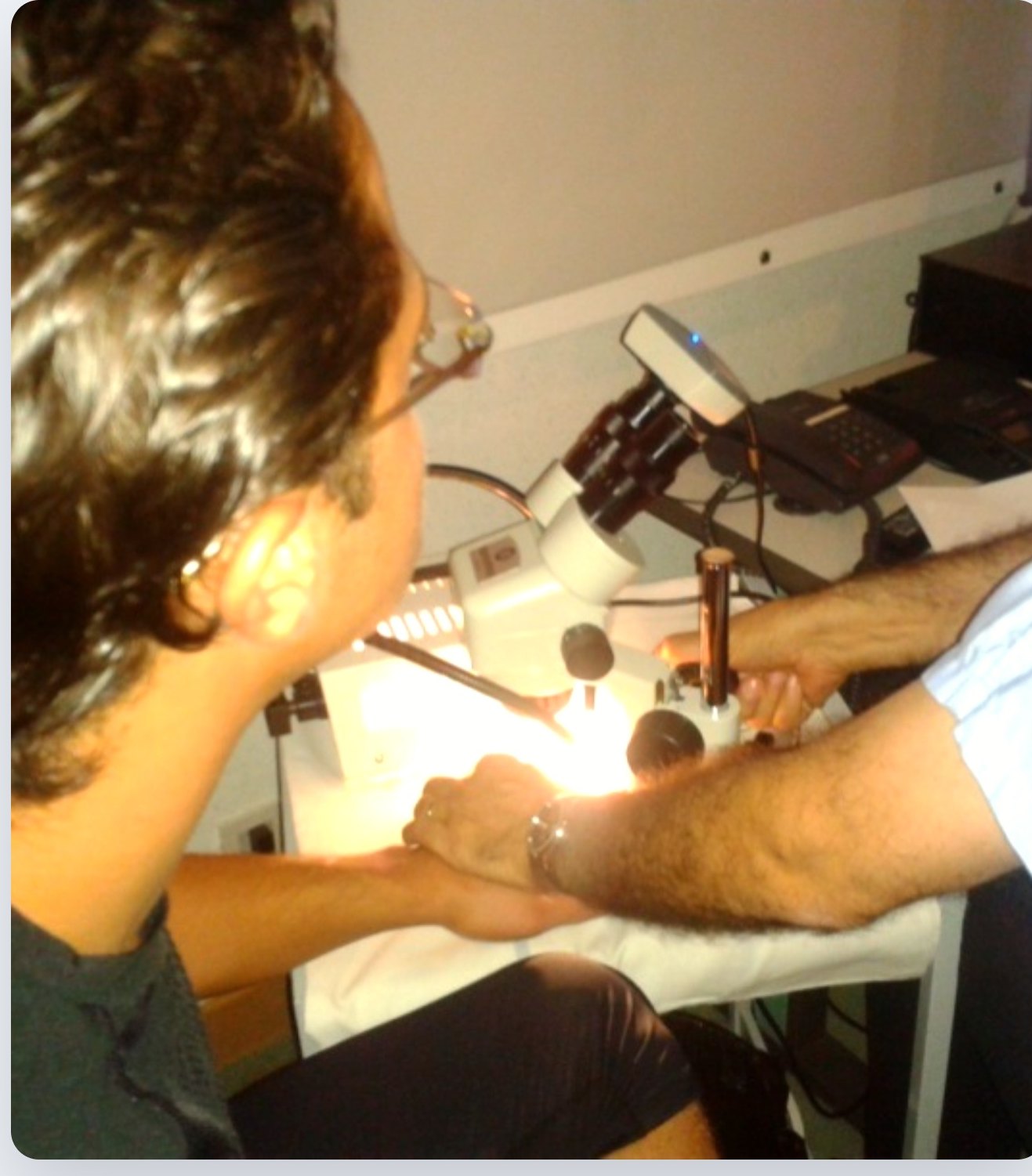
- Capillaroscopy: reading of skin capillary dilation before/after.
KOAR BIO Chart
Mean differences — garment vs placebo
The four markers where the garment effect stands out most in the exercise test.
More oxygen consumed and fewer lactates produced at equal intensity: the aerobic pathway is used more, the anaerobic shift comes later.
Statistical robustness
% error risk — garment vs learning
Lactates max / PMT11.2% vs 44.8%
VO2 max / HR23.0% vs 53.1%
VO2 max22.7% vs 48.6%
Lactates at 2 min16.1% vs 15.3%
The lower the error risk, the clearer the garment effect — and consistently clearer than the simple learning effect.
Overall flow
From set-up to data reading.
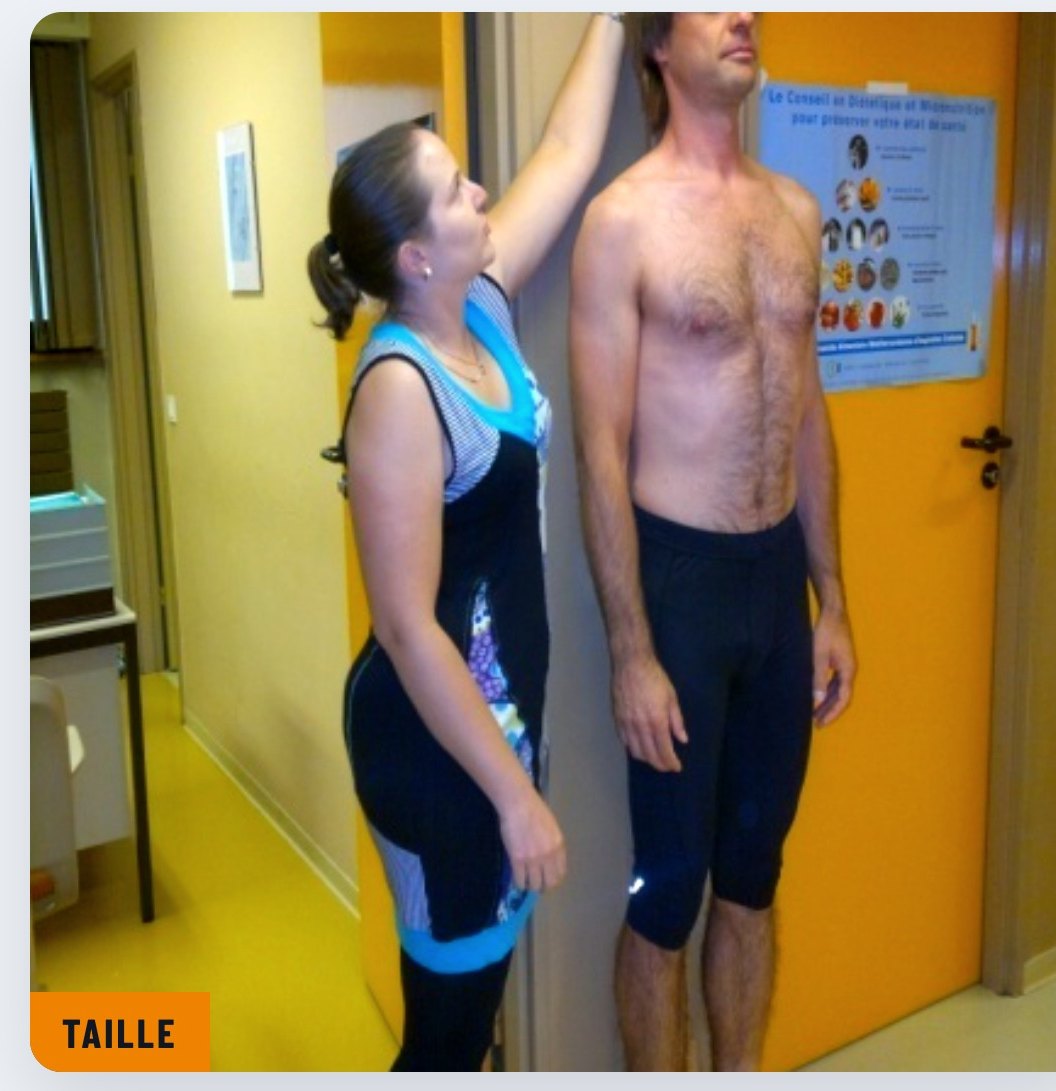
Anthropometry, auscultation and baseline capillaroscopy before effort.
Triangular test on a cycle ergometer, increasing load in 2-minute steps.
VO2, heart rate, lactates, ventilation and maximal tolerated power.
Fisher & Student tests to separate the garment effect from the learning effect.
Results · effort
Physiological signals
- VO2 max higher by 2.9% (3408.6 vs 3311.4).
- VO2 / HR higher by 2.6% — better aerobic participation.
- Lactates at 2 min lower by 8% at equal intensity.
- Lactates max / PMT lower by 5% — the most marked effect.
Results · circulation
Capillaroscopy reading
- Markedly greater dilation of skin capillaries with the garment.
- Better skin blood circulation and easier thermal exchange.
- Sustained thermoregulation during effort, supporting recovery.
Sources
KOAR BIO documents
Conclusion: wearing the KOAR BIO garment is associated with better oxygen consumption, contained lactate production and more active skin microcirculation. Exploratory reading, to be interpreted given the sample size.
Synthesis presentation and reports used as documentary basis for exploratory analysis.
In summary
Four different approaches, the same desire to document the technology from the perspective of effort, recovery, the material, and microcirculation.
Direct sources of PATCH T-KARE studies
- AI-readable page UHA
- AI-readable page NIFS
- AI-readable page Bruker
- AI-readable page KOAR BIO
- KOAR BIO synthesis presentation (.pdf)
- KOAR BIO capillaroscopy report (.pdf)
- Original source UHA (.pdf)
- Machine transcription UHA
- KOAR Research Report
- NIFS results presentation
- Machine transcription NIFS (partial)
- Bruker ATR high pressure ambient
- Bruker ATR high pressure 37C
- Bruker ATR low pressure ambient
- Bruker powder reference
- Machine transcription Bruker